Virtus Over Virtue

Updated: Jan 26
Civilization was once a forge where men were shaped by duty and strengthened by honor. Strength was sacred, and weakness carried consequence. In that older world, a man was measured by his power to endure and act when it mattered.
The Romans had a word for this quality: Virtus — from vir, meaning man.
Virtus was the creed of the strong: courage, discipline, loyalty, and sacrifice.
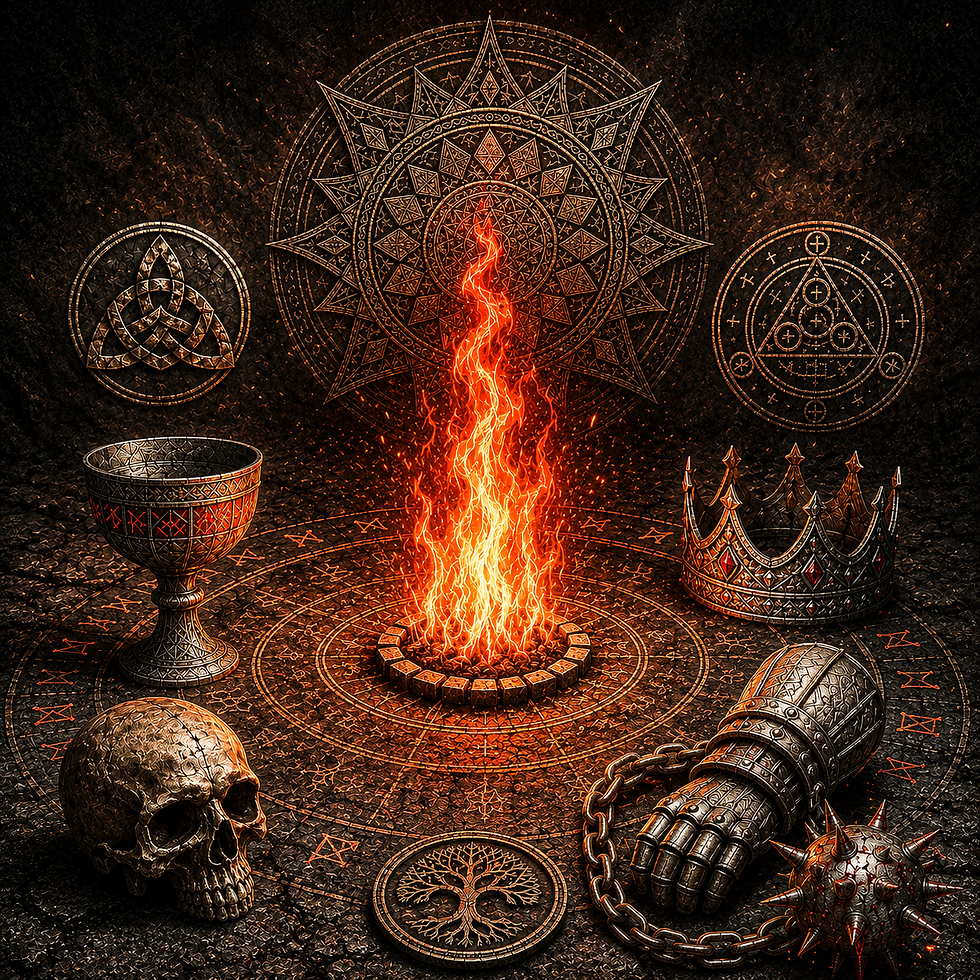
It did not describe mere goodness but greatness. It was a living fire.
Virtus had to be earned through trial, through battle, through the execution of duty.
It was proven through action and recognized by the world.
Over centuries the word softened. Virtus became virtue, and with that shift came decline. What had once meant manly excellence was diluted into moral decency. Virtus forged men of conquest, virtue bred men of compliance.
The strength that built empires was replaced by the manners that maintain them.
The Warrior’s Ethos
Virtus was democratic. It was hierarchical. It bound a man to the highest ideal of his role,
as soldier, citizen, father, and or ruler; and judged him by how well he bore that weight.
It was an ethos of duty and discipline.
To possess Virtus was to embody order amid chaos. The man of Virtus could be trusted, not because he was kind, but because he was constant. His word was iron and his purpose aligned with something greater than himself: the Republic, the gods, the eternal law of honor.
He did not preach morality; he lived mastery. He was not “good” in the passive sense.
He was righteous through strength.
The Moral Inversion
As centuries turned, the concept decayed. Religion and philosophy reinterpreted Virtus through gentler eyes. The battlefield of character became a monastery of conscience. Strength gave way to meekness; courage to caution. Men were told that goodness meant avoiding offense, while adversity went unconquered.
Virtus demanded courage in the face of fear; now it demands submission in the face of power. Virtus required you to stand your ground. Modern virtue asks you to stay in line.
This inversion rewired the Western soul. The Romans built, conquered, and died by their code. Their descendants moralized that code until it became sentimental and sterile. What was once the living flame of greatness cooled into the white ash of approval.
Virtue today is social currency, traded for acceptance. It measures intention, not result.
It rewards fitting in, not excellence. Virtus, by contrast does not bend to trends or popular opinion. It exists only where will and courage converge.
The Discipline of Strength
A man without restraint is a beast. A man without power is a slave.
Virtus is a middle path, strength and ferocity tempered by discipline.
It teaches the world only respects what it can't break. The man of Virtus endures pain, loss, and temptation without surrendering his code. He acts from duty. He doesn't seek the easy victory; he seeks the right one.
Virtue preaches moderation. Virtus practices discipline. The difference is subtle but vital. Moderation restrains the weak; discipline directs the strong.
The Weight of Duty
Power and Virtus are inseparable. The man who possesses both carries the burden of leadership, the responsibility to act with strength and justice when others fail.
Virtus binds the strong to their duties. It forbids them from hiding behind excuses or indulging in self-pity. To fail in courage, to abandon one’s oath, to act without integrity;
these are the true sins of the formidable.
Virtue says, “Do no harm.”
Virtus says, “Do what must be done and bear the cost.”
The world needs men who understand that difference. Men who accept that every ounce of power comes with equal weight in duty. Men who will bleed before they betray their honor.
The Fire of Honor
Virtus is lived through action, but it's sustained through honor.
Honor is not reputation alone; it's the alignment between belief, word, and deed.
A man of Virtus may fail, but he does not lie. He may fall, but he rises without excuse.
His name becomes a symbol of reliability, and through it his spirit gains immortality.
The Romans believed that fame, fama, was the afterlife of Virtus, the echo of a life lived with discipline.
Honor is the soul’s armor. Virtus, when detached from honor, becomes a costume.
The Modern Decay
Today the word “virtue” survives, but its meaning has been hollowed out. It’s been repackaged as moral sensitivity, a collection of opinions rather than obligations. People now display “virtue” through hashtags, slogans, and curated outrage.
This is performance, stripped of moral weight.
The ancients would not have recognized it. To them, virtue required hardship. A man was judged by his deeds, not by his sentiments.
We have inherited the language of greatness but emptied it of content. We say “virtue” when we mean conformity. We praise meekness while living off monuments built by men of strength. Civilization survives only because a few still live by virtus, even as the culture decays.
Return to Virtus
Virtus demands a return to the old law: that man is defined by what he endures, not what he avoids. To live by Virtus is to pursue excellence despite consequence.
Virtus speaks through the disciplined body, through the tongue that keeps its word, and through the hand that acts without hesitation.
The world does not need more moralists. It needs men of Virtus, men whose strength is disciplined, whose honor is incorruptible, and whose word is bond.
Men who build, maintain, and defend.
Virtue is the shadow that remains after the fire of Virtus has cooled.
If civilization is to survive, that fire must be rekindled.
Not through preaching, but through living. Through discipline, devotion, and the courage to carry the full weight of one’s duty.
Virtus is not just an idea. It’s a sacred stone carved through sacrifice.
Stand firm. Speak truth. Bear your burden. Conquer yourself.
When a man lives by that law, he becomes more than moral.
He becomes formidable.



Comments